
Teaching English online has changed a lot over the past few years. Pay rates, schedules, hiring requirements, and class formats are very different from what many “teach online” blogs still claim.
After spending a full year teaching English online, primarily to kids aged 5–12, here’s an honest breakdown of what it actually looks like in 2026, including pay, workload, scheduling, and who this path really makes sense for.
This isn’t a get-rich-quick story. But for the right person, it can still be a practical way to earn income remotely.
Why I Started Teaching English Online

My biggest motivator was extra income, with the added benefit of being able to work remotely while traveling.
Teaching English online appealed to me because:
- It didn’t require going back to school
- I could start part-time
- It worked around other commitments
- It could be done from outside my home country
Like many people considering TEFL certification, I wanted something flexible, but realistic.
Who I Teach (and What Classes Actually Look Like)
I currently teach kids between the ages of 5 and 12 and work with two different online teaching companies.
One company focuses on:
- 1-on-1 classes
- 30-minute lessons
- Pre-built lesson content
The other company focuses on:
- Group classes (around 10 students)
- 1-hour lessons
- A much higher energy requirement
At this point, all of my students are repeat students, which makes a huge difference. Consistent bookings come from students (and parents) who enjoy your classes and request you again.
That’s something beginners often underestimate: Repeat students are what make online teaching manageable long-term.
For a list of companies hiring, check out these 24 Places to Teach English Online.
My Weekly Teaching Schedule (Real Example)
This is my actual teaching schedule shown in Central European Standard Time, where I’m currently based.
Company A (1-on-1, 30-minute classes)
- Monday: 10:50–13:20
- Tuesday: 10:50–14:00
- Wednesday: 11:30–13:20
Company B (group, 1-hour classes)
- Thursday: 11:45–12:45 and 13:00–14:00
- Friday: 11:45–12:45 and 13:00–14:00
- Sunday: 13:00–14:00
Because of time zones, midday in Europe often equals early morning in the U.S. or evening in Asia. That’s an important consideration if you plan to teach while traveling.
One important reality about scheduling
Time off is harder than many people expect. With most online teaching companies:
- Schedules are set in advance
- Rescheduling isn’t always flexible
- There’s no true “semester break” unless the company offers one
Consistent income usually requires consistent availability.
How Much I Actually Make Teaching English Online
How much am I making at each of these online ESL companies?
- Company A: about $18/hour
- Company B: about $35/hour
At first glance, the higher hourly rate looks better. But hourly pay alone doesn’t tell the full story.
Weekly and monthly income
On average, I earn about:
- $275 per week
- Roughly 10–11 hours of teaching
That works out to roughly:
- $1,100 per month (before taxes)
This isn’t a fixed salary. Monthly income can be higher or lower depending on:
- Cancellations
- Holidays
- Student attendance
This is why consistency and class format matter just as much as the hourly rate. This is something a lot of people don’t realize until they’re actually teaching.
No Degree? No Problem! Here are 20 Places to Teach ESL Online with No Degree.
Why Higher Pay Doesn’t Always Mean Easier Work
This is one of the biggest misconceptions about teaching English online.
1-on-1 classes (lower pay, easier workload)
- Lessons are already prepared
- I review the content about 10 minutes before class
- Classes are calm and predictable
- No outside work
- No contact with parents
Group classes (higher pay, higher effort)
- Around 10 students per class
- Parents are often present
- Requires high energy for a full hour
- Feedback takes ~15 minutes per class
- Much more mentally exhausting
Both have pros and cons — but they feel very different day-to-day.
Pros of Teaching English Online
After a year, these are the biggest advantages:
- Remote work – You can teach from almost anywhere with stable internet
- Flexible hours – Especially if you don’t need full-time income
- Repeat students – Classes get easier over time
- No commuting – Everything is online
- Minimal admin work – No lesson planning, no parent communication (depending on company)
Cons to Be Aware Of
There are also real downsides:
- Time off can be tricky
- Income isn’t guaranteed
- Cancellations happen
- Energy matters — especially when teaching kids
- Not scalable long-term without moving into higher-level roles
This is not passive income. You are actively working for every hour paid.
Is Teaching English Online Still Worth It in 2026?
The honest answer: yes — but only for the right person.
It can be worth it if you:
- Want extra or supplemental income
- Are okay with part-time hours
- Enjoy working with kids
- Value flexibility over stability
- Are realistic about pay
It’s probably not a good fit if you:
- Need guaranteed full-time income
- Want lots of paid time off
- Don’t enjoy high-energy teaching
- Expect it to replace a full career immediately
How to Get Started (TEFL Certification)
Most reputable online teaching companies still require a TEFL certification, even if you don’t have prior teaching experience.
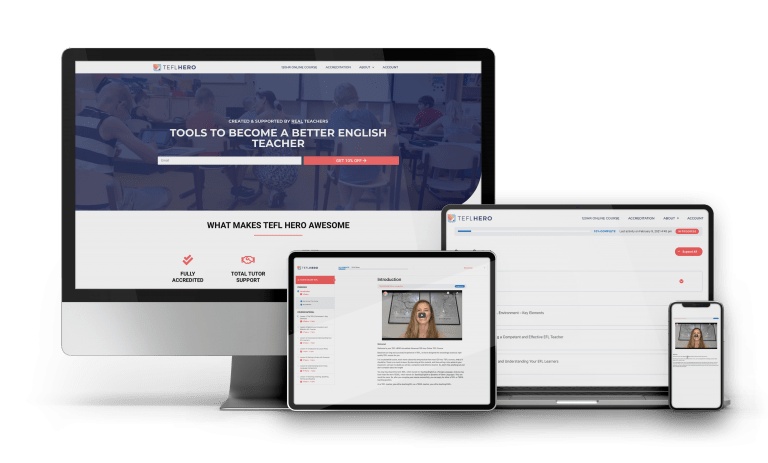
If you’re starting from scratch, TEFL Hero’s Online 120-hour TEFL course is usually the best place to begin. It’s enough to meet hiring requirements and gives you a foundation in:
- Lesson structure
- Classroom management
- Teaching kids vs adults
- Online teaching expectations
This course is 100% online, self-paced, and accepted by online teaching platforms worldwide.
Watch the Full 1-Year Breakdown
If you want to see exactly how this works in practice — including my weekly schedule, pay breakdown, and class formats — I walk through everything step by step in a 15-minute video on our YouTube channel.
Where does this post come from?
This post was originally published at Teaching English Online in 2026: Is It Still Worth It? on the TEFL Hero Website.