Teach English in Colombia
Date: 16 January 2026
Read Time: 12 minutes
Why teach English in Colombia?
Colombia has transformed into one of Latin America’s most exciting TEFL destinations, combining high demand for English with a relatively low cost of living and an increasingly positive reputation for safety and lifestyle. For many teachers, it offers an ideal mix of career development and adventure, from Andean cities to Caribbean beaches.
Government initiatives to improve English proficiency, a growing tourism sector and the expansion of bilingual schools all contribute to a strong market for qualified English teachers. Whether you want buzzing big‑city life in Bogotá or a slightly slower pace in Medellín, Colombia gives you plenty of choice.
Best cities in Colombia to teach English
There are teaching jobs across the country, but certain cities stand out for job volume, salary potential and lifestyle: Bogotá, Medellín and key coastal cities such as Cartagena and Barranquilla. Each has its own personality, climate and cost of living, so it is worth choosing based on your priorities.
Bogotá
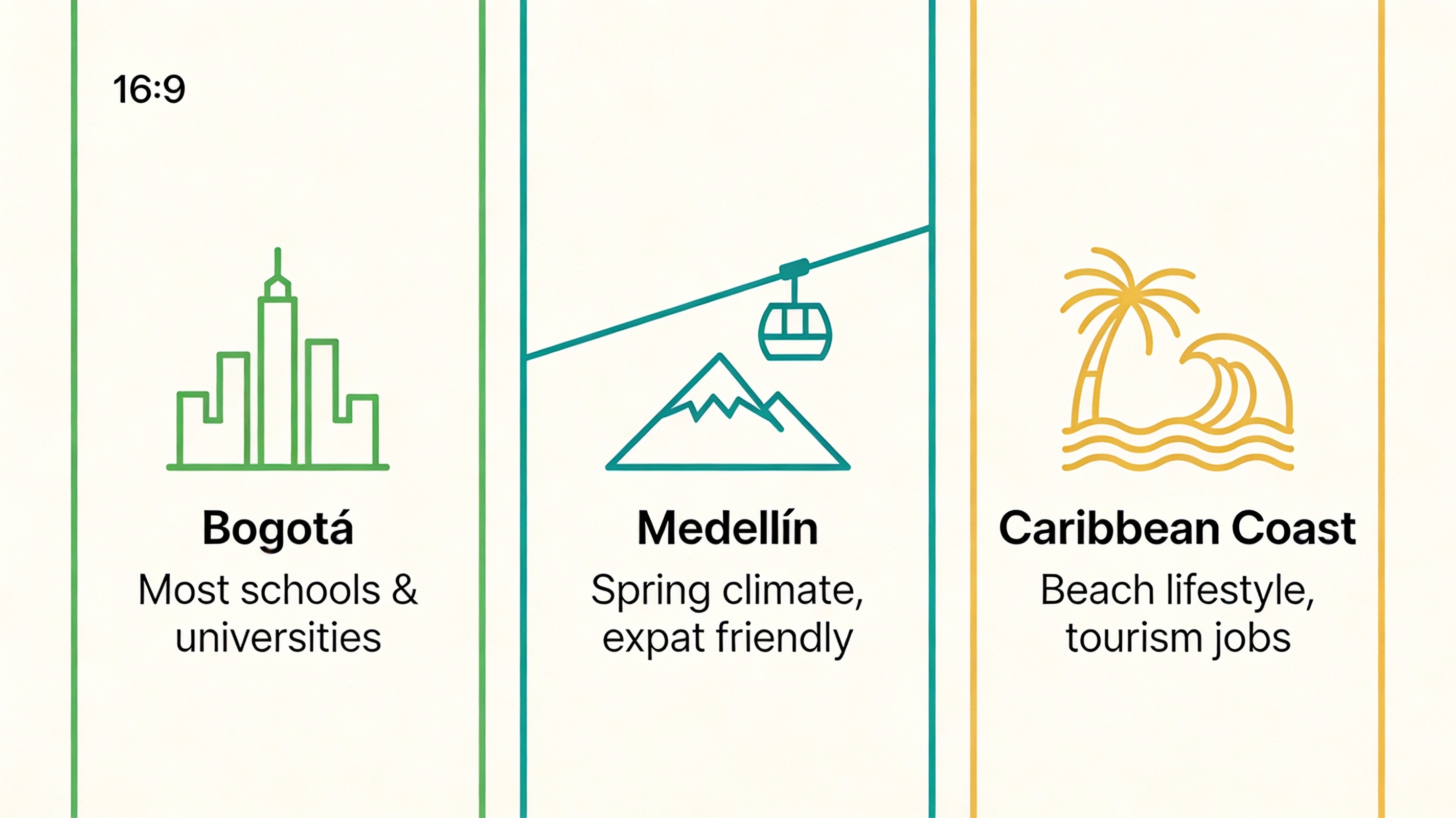
Bogotá, the capital, is Colombia’s political and economic hub and has the highest concentration of universities, private schools and language institutes. English teachers here work with a wide range of students, from teenagers aiming for international exams to professionals studying business English.
Salaries in Bogotá are often slightly higher than in many smaller cities, and there is steady demand throughout the year. The trade‑off is that the city can feel busy and fast‑paced, and the altitude and cooler climate are factors to consider.
Medellín
Medellín is famous for its spring‑like climate, modern transport system and strong expat community. It has a growing number of language schools, private institutions and universities that hire foreign teachers, making it a popular alternative to the capital.
Costs in Medellín have risen in recent years and are now slightly higher than in Bogotá in some categories, particularly rent in popular neighbourhoods. Many teachers still choose the city for its lifestyle, public transport and welcoming atmosphere.
Coastal cities: Cartagena & Barranquilla
Colombia’s Caribbean coast adds a different flavour, with cities such as Cartagena and Barranquilla offering more tropical weather, beaches and a strong tourism industry. English teachers here may work in private schools, language centres or hospitality‑linked training roles.
Salaries on the coast can be a little lower than in Bogotá or Medellín, but the slower pace of life, cultural festivals and sea views are a major draw for many teachers.
Average TEFL salaries & demand in Colombia
Earnings in Colombia depend on city, institution type, qualifications and experience. The ranges below give a realistic picture for 2026.
| Institution Type (Colombia) | Typical Monthly Salary (COP) | Approx. Monthly Salary (USD) | Demand Level (2026) |
|---|---|---|---|
| Language schools (nationwide) | 2,500,000–4,000,000 | Approx. 630–1,000 | High, especially in Bogotá & Medellín |
| Public / government schools | 2,500,000–3,500,000 | Approx. 630–880 | Moderate–High through programmes and local hiring |
| Private K–12 schools | 3,000,000–5,000,000 | Approx. 750–1,250 | High in larger cities |
| Universities & colleges | 3,500,000–6,000,000 | Approx. 880–1,500 | Moderate; prefer experience |
| International schools | 6,000,000–10,000,000+ | Approx. 1,500–2,500+ | Competitive; higher requirements and benefits |
| Private tutoring (hourly) | 30,000–80,000 per hour | Approx. 8–21 per hour | High in major urban areas |
Many teachers in Colombia cover their living costs comfortably and fund travel or savings by combining salaried work with private students or online teaching. International schools and some university posts may include benefits such as health insurance, housing support and paid holidays, which significantly improve the package.
Living costs in Colombia
Colombia remains more affordable than many Western countries, but costs vary between cities and neighbourhoods. Bogotá and Medellín are generally more expensive than smaller cities, particularly when it comes to rent in popular areas.
A single teacher can often live on the equivalent of 700–1,200 USD per month, including rent, depending on the city and lifestyle. Sharing accommodation, eating local food and using public transport make it easier to live comfortably on a teacher’s salary while still enjoying travel and social life.
Visa requirements for Europeans and US citizens
To teach legally in Colombia, most foreign teachers need a work‑related M‑category visa sponsored by an employer. Visa rules can change, so it is essential to check current guidance from Colombian consulates and the Ministry of Foreign Affairs before applying.
Typical work visa process
A common pathway for both European and US citizens looks like this:
- Secure a formal job offer from a recognised school, university or programme in Colombia.
- Your employer provides supporting documents such as the contract, company registration and justification for hiring a foreign teacher.
- You submit an online visa application to the Colombian Ministry of Foreign Affairs, uploading required documents and paying the relevant fees.
- If approved, you visit a Colombian consulate (often in your home country or nearby) to have the visa placed in your passport.
- After arriving in Colombia, you apply for your cédula de extranjería (foreign ID card) within the timeframe specified in your visa conditions.
Commonly requested paperwork includes a valid passport, job offer or contract, passport‑style photos, proof of qualifications and sometimes a criminal background check or apostilled documents. Schools that regularly hire foreign staff usually guide new teachers through the process.

Colombia & the wider Latin America TEFL scene
Colombia sits alongside Mexico, Chile, Argentina and Peru as one of the core Latin American TEFL destinations. Many teachers move between these countries over several years, using experience and references from one country to secure better posts in another.
If you are planning a long‑term TEFL career in Latin America, it makes sense to choose a TEFL qualification and planning tools that carry weight across the region, not just in a single country. This gives you flexibility to switch between cities and countries as your goals evolve.
Best TEFL courses for Colombia & is a degree required?
Most reputable schools and institutes in Colombia expect teachers to have at least a 120‑hour accredited TEFL certificate. Higher‑paying roles at private and international schools often prefer, or require, a Level 5‑equivalent qualification and some classroom experience.
A four‑year degree is not always mandatory for every language school job, but it is usually required for international schools, universities and many private schools. Having both a degree and a strong TEFL qualification significantly increases your options and earning potential in Colombia and the wider region.
Helpful Premier TEFL resources include:
School terms & the best time to apply
Colombia’s school year often runs from late January or February through to November, although exact dates vary by institution and region. This means the main hiring season for schools and universities typically falls in the months leading up to the new academic year.
Language schools recruit throughout the year but often have peaks in demand at the start of the calendar year and mid‑year, as well as around major exam dates. Applying a couple of months before these busy periods increases your chances of finding a good timetable.
Is it easy to find a job & where to search?
For teachers with a recognised TEFL qualification, it is generally achievable to find work in Colombia, particularly in larger cities and via organised programmes. International schools and university roles are more competitive, but language institutes and private schools provide many opportunities for new teachers.
Effective job‑hunting strategies include:
- Searching established TEFL job boards and teach‑abroad websites that list positions in Colombia and wider Latin America.
- Applying directly to language schools, private schools and universities in Bogotá, Medellín and major coastal cities.
- Exploring government‑linked or private programmes that place teachers into public and low‑income schools with structured support.
- Arriving in country with savings and following up leads in person, as some employers prefer local interviews.
Reading reviews, speaking to current teachers and working with reputable providers like Premier TEFL helps you filter out less reliable offers and focus on schools that provide fair contracts and support.

Types of schools in Colombia
English teachers in Colombia can work in several institution types: language schools, public schools, private and bilingual schools, international schools, universities and corporate training providers. Each comes with its own balance of salary, hours, benefits and expectations.
Many teachers begin in language schools to gain experience. They then move into higher‑paid private or international school positions once they have proven classroom skills and local references. Private tutoring, both offline and online, is a common way to supplement income across all school types.
How TEFL Explorer helps you teach in Colombia
TEFL Explorer is an AI‑powered learning and planning platform that combines accredited Level 5 TEFL training with smart tools for lesson planning, feedback and job‑market research. It allows you to compare destinations, salaries and visa options across Latin America, including Colombia and neighbouring countries.
Features such as AI lesson‑plan generation, instant activity ideas, ready‑made feedback templates and real‑time market insights help you save preparation time and make better choices about where to teach. Using TEFL Explorer alongside Premier TEFL’s courses and South America guides gives you a clear, data‑driven route from certification to classroom in Colombia.
Learn more about TEFL Explorer and its benefits here: TEFL Explorer – AI‑Powered TEFL Education.
FAQs
Do I need a degree to teach English in Colombia?
A degree is not required for every teaching role in Colombia. Some language schools hire non‑degree teachers who have a recognised TEFL certificate. However, a bachelor’s degree is usually expected for international schools, universities and many private schools. It significantly increases your options.
How much can I earn teaching English in Colombia?
Most first‑time teachers earn somewhere between 2,500,000 and 5,000,000 COP per month, depending on city and school type. International schools and some university posts pay more and often include benefits such as housing support or health insurance.
Is it safe to teach English in Colombia?
Safety in Colombia varies by city and neighbourhood, as in many countries. Teachers are normally advised to follow local advice, avoid high‑risk areas, use trusted transport options and take standard urban precautions. Working with reputable schools and programmes provides additional guidance and support.
Can I save money while teaching in Colombia?
With sensible budgeting, many teachers cover living costs and save modestly. This is particularly true if they share accommodation and avoid very expensive neighbourhoods. Those in better‑paid posts or lower‑cost cities often have the strongest savings potential.
Is Colombia a good base for teaching in Latin America?
Yes, Colombia is well connected by air to other Latin American countries. It offers TEFL experience that transfers well to destinations such as Mexico, Chile, Peru and Argentina. Many teachers use Colombia as a stepping stone in a longer Latin America teaching journey.
The post Teach English in Colombia | Complete TEFL Guide 2026 appeared first on Premier TEFL.