Non‑Native English Speakers: Your Complete Guide to Getting TEFL Certified in 2026
Being a non‑native English speaker does not close the door on a TEFL career—in 2026, it can actually be one of your biggest strengths. Employers increasingly care less about your passport and more about your English level, teaching skills, and professionalism. With the right certification and strategy, you can build a successful teaching path online or abroad.
This guide is written for non‑native English speakers who want clear, honest answers: what level of English you really need, which TEFL course to choose, how to handle “native speakers only” barriers, and how to present yourself with confidence in a competitive market.
Can Non‑Native English Speakers Really TEFL in 2026?
The short answer is yes—non‑native English speakers can absolutely get TEFL certified and work as English teachers in 2026. The industry is slowly moving away from the outdated idea that only native speakers make good teachers and towards a focus on proficiency, pedagogy, and classroom performance.
Modern schools and recruiters look at questions like:
-
Is your English level high enough to model accurate language?
-
Have you completed a recognised TEFL course?
-
Do you understand teaching methodology, not just “know English”?
-
Are you reliable, professional, and easy to work with?
Many providers explicitly welcome non‑native applicants as long as their English is strong. Some even highlight non‑native teachers as especially empathetic because they know what it’s like to learn English step by step.
What English Level Do You Need?
Most reputable TEFL providers and employers expect non‑native speakers to have at least an upper‑intermediate or advanced level of English.
Typical benchmarks include:
-
At least B2 on the CEFR scale; many employers prefer C1 (Advanced) or C2 (Proficient).
-
IELTS Academic around 6.5 or higher, or an equivalent TOEFL score, when formal proof is requested.
Some TEFL courses will simply assess your written application and a brief interview rather than demanding an exam certificate, but if you plan to target competitive jobs, having a recognised test score on your CV can help.
If you’re unsure of your level, you can:
-
Take an online placement test and treat it as a rough guide.
-
Ask a TEFL advisor to review a short written task and a spoken sample.
-
Record yourself explaining a grammar point or telling a story and listen back for clarity and accuracy.
If you’re around B2 or above, you’re usually ready to begin a serious TEFL course; the course will then refine your classroom English, not teach you basic grammar from scratch.
Choosing the Right TEFL Course as a Non‑Native Speaker
Not all TEFL certificates are equal, and as a non‑native English speaker you need a qualification that can stand up to extra scrutiny from employers.
Key features to look for
-
Accreditation or regulation
Your course should be accredited by a recognised body or regulator; this is what makes it credible in the eyes of schools and visa officers. -
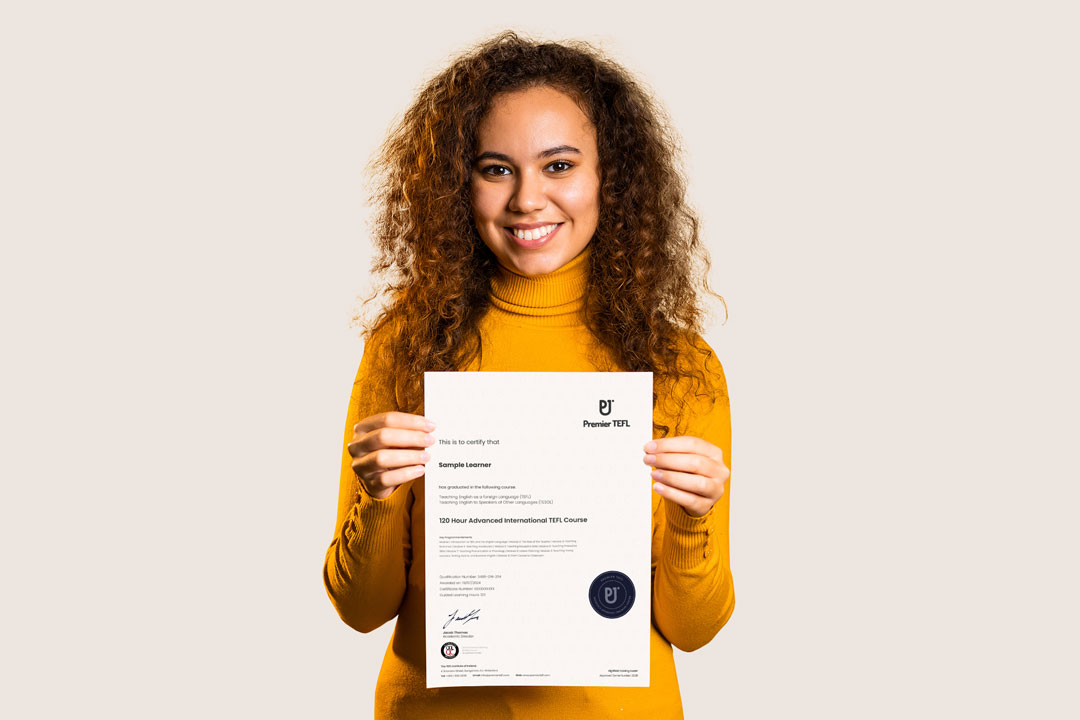
At least 120 hours of training
A 120‑hour TEFL course is widely seen as the minimum standard for entry‑level jobs. Shorter “weekend” or bargain courses are often rejected. -
Solid methodology modules
You want training in lesson planning, classroom management, teaching grammar and vocabulary, skills lessons, and error correction—not just generic travel tips. -
Observed or assessed teaching practice, if possible
A course that includes real or simulated teaching practice, with feedback, gives you concrete experience to put on your CV. -
Optional specialist add‑ons
Specialist modules in areas like Young Learners, Business English, IELTS/Exam English, or Teaching Online can help you stand out in crowded markets.
Because non‑native teachers may be judged more strictly on paper, many advisors recommend choosing a higher‑level qualification such as a Level 5 TEFL diploma when possible, as this signals deeper training.
Online vs In‑Person TEFL in 2026
Both online and in‑person TEFL courses can work well for non‑native speakers; the right choice depends on your budget, schedule, and goals.
Online TEFL courses are:
-
Flexible, allowing you to study around work or university.
-
Often more affordable, leaving budget for exam fees and relocation.
-
Convenient for revisiting grammar videos and written feedback.
In‑person or blended courses offer:
-
Immediate face‑to‑face teaching practice with peers.
-
Direct feedback on your pronunciation and classroom presence.
-
Local networking and job leads in the country where you study.
As long as the course is properly accredited and at least 120 hours, employers generally focus more on what you studied and how you demonstrate those skills than on whether the course was online or in‑person.
Do Non‑Native TEFL Teachers Need a Degree?
Whether you need a bachelor’s degree depends more on the country and visa rules than on your TEFL provider.
In many cases:
-
Online teaching platforms often prefer or require a degree, but some niche or smaller companies are flexible if your TEFL training and demo lessons are strong.
-
Some popular government‑sponsored programs and visa categories in Asia (such as in Japan or Korea) require a degree and often restrict work visas to certain nationality lists.
-
Private language schools in parts of Europe and Latin America may accept non‑native, non‑degree teachers if they are locally based and have a recognised TEFL plus good English.
If you don’t have a degree, your best path is usually:
-
An accredited 120+‑hour TEFL (ideally Level 5 if you can).
-
A strong portfolio (lesson plans, demo video, practice feedback).
-
Targeting markets and roles that are known to hire non‑native, non‑degree teachers, especially online or in smaller private schools.
Where Non‑Native English Teachers Can Work in 2026
Visa rules and hiring preferences vary, but there are many realistic options for non‑native TEFL teachers.
Countries and contexts that often welcome non‑native teachers include:
-
Private language schools across Europe, such as Spain, Italy, Poland and the Czech Republic, where schools often care more about TEFL training and teaching skill than nationality.
-
Large parts of Latin America, including Mexico, Colombia and Chile, where demand for English remains high and hiring standards focus on local availability, qualifications, and references.
-
Private academies and training centres in Asia and the Middle East that hire teachers already living locally or with strong CVs.
-
The global online teaching market, where you can connect directly with learners around the world as a freelancer or through flexible platforms.
More restrictive situations tend to be:
-
Government programs and public‑school schemes with fixed nationality lists for work visas.
-
Employers who still insist on “native speakers only” regardless of qualifications.
Your strategy should be to research each target country’s visa and job market, looking specifically for information about non‑native teachers working there, and then align your TEFL and documentation accordingly.

What Employers Expect from Non‑Native TEFL Teachers
Employers hiring non‑native teachers tend to look closely at several core areas.
They typically expect:
-
Proof of strong English – a C1/C2 level, exam results, or a degree taught in English.
-
Recognised TEFL certification – at least 120 hours, with good content and accreditation.
-
Clear, confident communication – both spoken and written English that students can easily understand.
-
Professionalism – punctuality, well‑structured lesson plans, and a positive classroom presence.
Many schools also value the fact that you, as a non‑native speaker, understand grammar from the learner’s perspective and can anticipate common errors. This is something you should lean into when you write your CV or attend interviews.
Building a Strong TEFL CV as a Non‑Native Speaker
Your CV is often where employers first see that you are not a native speaker, so it needs to inspire confidence from the first glance.
Helpful moves include:
-
Stating your English level clearly at the top (for example “C1 English – IELTS 7.5”).
-
Highlighting your TEFL qualification with details: hours, level, and awarding body.
-
Bringing forward any experience related to teaching, tutoring, mentoring, training, or working with children and teenagers.
-
Describing what you actually did in those roles—planning lessons, explaining concepts, leading activities—so employers can picture you in their classroom.
If your TEFL course included assessed teaching practice, include that under “Teaching Experience,” clearly labelled as part of your training.
Handling the “Native Speaker Only” Issue
At some point in your journey, you will encounter job ads that say “native speakers only” or strongly prefer certain passports. This is frustrating, but it is also part of the reality of current hiring and visa systems.
Instead of trying to argue employers out of these policies, focus on what you can control:
-
Target schools and platforms that explicitly accept non‑native teachers.
-
Present clear proof of your English level (exam scores, degrees, references).
-
Emphasise the advantages of your learner perspective in your cover letters and interviews.
A balanced way to address it in conversation is to say something like:
“I’m a non‑native English speaker with C1‑level English and an accredited TEFL certificate. Learning English myself has made me very aware of how to explain difficult concepts clearly, and my students appreciate that I understand their perspective.”
Schools that value teaching quality will respond positively to that; those who do not are unlikely to be your best long‑term fit anyway.

Improving Pronunciation and Confidence
Many non‑native teachers worry about their accent more than employers do. What most recruiters actually care about is whether students will understand you easily.
You can build pronunciation confidence by:
-
Regularly listening to and shadowing clear native or near‑native models, focusing on rhythm and stress rather than trying to copy every sound.
-
Recording yourself answering common TEFL interview questions and listening back for clarity and natural stress patterns.
-
Working intentionally on the sound contrasts and stress patterns that are most challenging for speakers of your first language.
-
Seeking feedback from trainers, TEFL tutors or experienced teachers who understand how to give constructive pronunciation advice.
Your goal is not to sound like you were born in London or New York but to be a clear, confident model of international English that learners can understand and aspire to.
From TEFL Certification to Your First Job
Once you’re TEFL certified, your focus shifts from “Can I do TEFL?” to “How do I turn this into paid teaching?”
A realistic pathway for non‑native teachers in 2026 often looks like this:
-
Complete an accredited 120+‑hour TEFL course (ideally Level 5).
-
Build a mini‑portfolio: lesson plans, a short demo video, and any practice teaching reports.
-
Start with flexible work—online tutoring, conversation classes, or local part‑time roles—to build real hours and collect feedback.
-
Use that experience and student feedback to apply for more competitive schools or full‑time contracts.
As your teaching record grows, your first language becomes less important than your results and references.
Mindset: Turning “Non‑Native” into Your Advantage
The final piece of the puzzle is mindset. Many of the most successful non‑native English teachers reached their goals by reframing their story instead of apologising for it.
Remember that you:
-
Know exactly what it feels like to learn English as a second or third language.
-
Understand where and why typical learner errors happen.
-
Can model effective study strategies and a growth mindset for your students.
-
Bring additional languages and cultural perspectives into the classroom.
When you combine those strengths with a recognised TEFL qualification, proven English proficiency, and a professional attitude, you become exactly the kind of teacher the 2026 TEFL market needs—regardless of your first language.
The post Non-Native English Speakers: Your Complete Guide to Getting TEFL Certified in 2026 appeared first on Premier TEFL.