Teach English in Mexico
Date: 16 January 2026
Read Time: 12 minutes
Why teach English in Mexico?
Mexico is one of the most popular TEFL destinations in Latin America, thanks to its large population, strong tourism sector and growing demand for English in business and higher education. For many teachers, it offers a blend of vibrant culture, relatively low cost of living and easier entry requirements than some Asian or Middle Eastern markets.
With major hubs like Mexico City, Guadalajara and Monterrey plus coastal resort towns, there is a wide variety of teaching environments, from big‑city language schools to private schools near the beach. Mexico also works well as a launchpad for broader Latin America travel, with good links to Central America and South America.
Best cities in Mexico to teach English
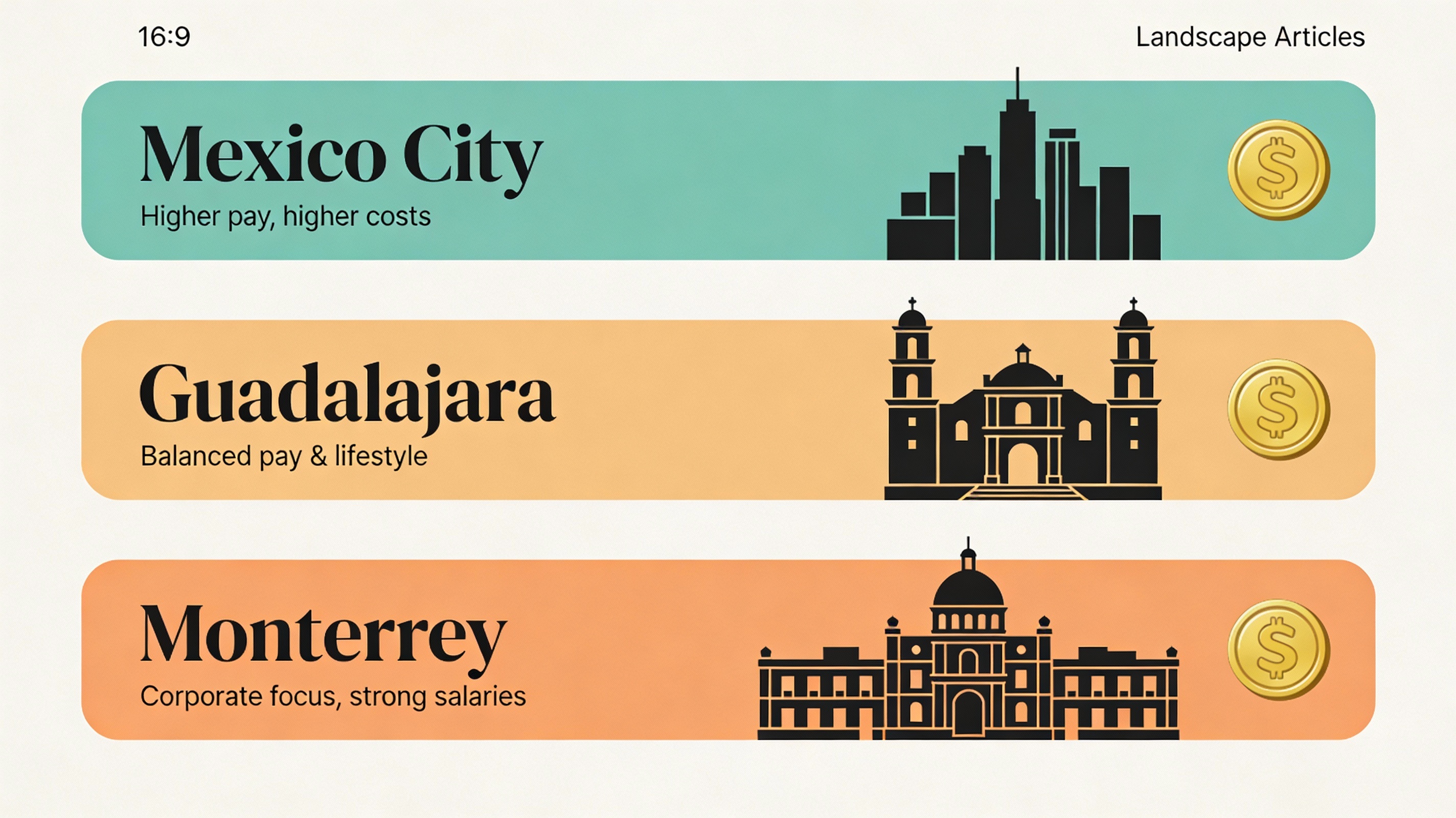
While you can find schools across the country, certain cities stand out for job volume, salary potential and lifestyle: Mexico City, Guadalajara, Monterrey and popular coastal destinations such as Cancun and Puerto Vallarta. Each city offers a slightly different balance of cost of living, student profile and free‑time options.
Mexico City
Mexico City is the country’s economic and cultural capital and hosts the largest concentration of language schools, private universities and international schools. English teachers here work with everyone from young learners to business professionals, and there is high demand for exam prep and corporate classes.
Salaries in Mexico City are often at the higher end of the national range, but rent and transport costs are also higher than in smaller cities. For teachers who want plenty of job options and big‑city life, it is usually the first choice.
Guadalajara
Guadalajara is known for its universities and tech sector and has a healthy market for English teachers in language institutes and private schools. The city offers a slightly lower cost of living than Mexico City while still providing a cosmopolitan feel and good public transport.
Teachers often find that institutes in Guadalajara offer competitive hourly rates with the chance to build up a full timetable across multiple campuses.
Monterrey
Monterrey is a key industrial and business hub near the US border, which drives strong demand for corporate English training and university‑level teaching. Teachers here are more likely to work with adult professionals and higher‑education students than young learners.
Because salaries are often higher in the north to match living costs, Monterrey can be attractive for teachers focused on maximising earnings while still enjoying city life.
Coastal resort areas
Cities such as Cancun, Playa del Carmen and Puerto Vallarta offer more of a resort lifestyle, with jobs across private schools, language centres and tourism‑related training. Salaries may be slightly lower than in the big inland cities, but some teachers value the beachside environment and seasonal work options.
These locations are popular with travellers who want to combine teaching with diving, surfing or hospitality work, so competition can be higher during peak seasons.
Average TEFL salaries & demand in Mexico
Teacher earnings in Mexico vary by city, institution type and experience, but most first‑time teachers fall within the ranges below.
| Institution Type (Mexico) | Typical Monthly Salary (MXN) | Approx. Monthly Salary (USD) | Demand Level (2026) |
|---|---|---|---|
| Language schools (nationwide) | 10,000–25,000 | Approx. 600–1,500 | High, especially in major cities |
| Private K–12 schools | 15,000–30,000 | Approx. 900–1,800 | Moderate–High in urban areas |
| Universities & colleges | 18,000–35,000 | Approx. 1,100–2,100 | Moderate; prefer experience |
| International schools | 25,000–45,000+ | Approx. 1,500–2,700+ | Competitive; higher requirements |
| Private tutoring (hourly) | 150–350 per hour | Approx. 9–20 per hour | High in major cities |
Most teachers cover their basic living costs comfortably and can save modestly or fund travel around Latin America by combining salaried work with private students or online teaching. Packages at international schools and some universities may also include benefits such as healthcare contributions, paid holidays or assistance with paperwork.
Living costs in Mexico
Mexico’s cost of living is generally lower than that of Western Europe, the US or Canada, but varies between cities. Mexico City and Monterrey tend to be the most expensive, especially for rent, while smaller cities and many coastal areas are more affordable.
Rough estimates suggest that a single teacher in a major city might spend 400–700 USD equivalent per month on basic living costs excluding rent, and 800–1,200 USD including rent depending on neighbourhood and lifestyle. Sharing accommodation or living slightly outside city centres can reduce expenses significantly.
Visa requirements for Europeans and US citizens
Visa rules can change, but teachers who plan to work legally in Mexico usually need a temporary resident visa with permission to work, often referred to as a work visa, linked to an employer. Many teachers start by interviewing on a tourist entry and then complete paperwork with their school, but obtaining the correct work authorisation is essential for long‑term, compliant employment.
Typical work visa process
For both European and US citizens, a common pathway is:
- Secure a formal job offer from a recognised school or institution in Mexico.
- Your employer files an application with the National Immigration Institute (INM) in Mexico to request permission to hire you.
- Once approved, you attend a Mexican consulate in your home country or another authorised country to receive a visa stamp in your passport.
- Within a set number of days after arriving in Mexico, you finalise the process by applying for your temporary resident card, which serves as your ID and work permission.
Documents typically include a valid passport, job offer letter or contract, proof of qualifications, passport photos and sometimes police clearance or financial evidence. Because requirements can shift, teachers should always check official Mexican government and consulate websites before applying.
Mexico & the wider Latin America TEFL scene
Mexico sits at the northern edge of Latin America and shares many characteristics with other regional TEFL destinations, including strong demand for conversational English, business English and exam prep. Teachers often use Mexico as a first step before exploring roles in Central America and South America, or vice versa.
If you are interested in a broader Latin America career, it makes sense to choose a TEFL course and planning tools that are recognised across the region, not just in one country. Premier TEFL’s destination content and Level 5‑recognised courses are designed to support this kind of flexible, multi‑country path.
Best TEFL courses for Mexico & is a degree required?
For most entry‑level jobs in Mexico, schools expect at least a 120‑hour accredited TEFL certificate, and many prefer teachers with observed teaching practice or a Level 5‑equivalent course. Premier TEFL’s 120 Hour TEFL Course and advanced 240 Hour TEFL Course are both suitable for Mexican employers and give you flexibility to move elsewhere in Latin America later.
A four‑year degree is not always compulsory for every institution in Mexico, particularly at smaller language schools, although degree‑holders generally have access to more positions and higher‑paying posts. International schools, many universities and some well‑established private schools usually require a degree plus a TEFL certificate and, ideally, teaching experience.
Helpful internal resources include:
School terms & the best time to apply
Mexico’s school year typically runs from around August or September through to June, with some variation between public and private schools. This means that peak hiring for K–12 schools and many universities takes place in the months before the new academic year, especially from May to August.
Language schools often recruit year‑round but tend to see higher demand in January, after Easter and at the start of the academic year, so applying a couple of months before those periods can help you secure more interviews.
Is it easy to find a job & where to search?
For teachers with a recognised TEFL certificate, it is generally realistic to find work in Mexico, especially in larger cities and tourist areas where student demand is high. International schools and university posts are more competitive, but language institutes and private tutoring provide many entry points into the market.
Useful job‑hunting strategies include:
- Searching reputable TEFL and teach‑abroad job boards that list Mexico and broader Latin America vacancies.
- Contacting language schools and private institutions directly in cities such as Mexico City, Guadalajara and Monterrey.
- Combining online applications with in‑person visits once in country, as many schools hire locally and appreciate meeting candidates face‑to‑face.
External resources such as major teach‑abroad portals and programme guides give additional context on programmes, salaries and visa expectations.
Types of schools in Mexico
English teachers in Mexico work across several institution types: language schools, private and bilingual K–12 schools, universities, international schools and corporate training providers. Each type offers different schedules and rewards; for example, language schools may involve evening and weekend shifts, while private schools offer more traditional Monday–Friday timetables.
Many teachers begin in language schools to gain experience and then move into better‑paid roles in private or international schools once they have classroom hours and references. Private tutoring, both in‑person and online, is a common way to boost income regardless of primary job.
How TEFL Explorer helps you teach in Mexico
TEFL Explorer is an AI‑powered learning and planning platform that combines accredited Level 5 TEFL training with smart tools for lesson planning, feedback and job‑market research. It allows you to compare destinations, salary ranges and visa options across Latin America, including Mexico and South American hotspots.
Features such as AI lesson‑plan generation, custom activity creation, ready‑made feedback templates and real‑time market insights help you save preparation time and make better decisions about where to live and work. Using TEFL Explorer alongside Premier TEFL’s course options and internship articles gives you a clear, data‑driven pathway from qualification to classroom in Mexico and beyond.
Learn more about TEFL Explorer and its benefits here: TEFL Explorer – AI‑Powered TEFL Education.
FAQ
Do I need a degree to teach English in Mexico?
A degree is not legally required for every teaching position in Mexico, and some language schools hire non‑degree holders who have a recognised TEFL certificate. However, a degree is normally expected for international schools, universities and the better‑paid private schools, so it expands your options.
How much can I earn teaching English in Mexico?
Most first‑time teachers earn between about 10,000 and 25,000 MXN per month at language schools, with higher ranges at private schools, universities and international schools. Private tutoring and online teaching can increase total monthly income beyond these base figures.
Is it safe to teach English in Mexico?
As in many countries, safety in Mexico varies by city and neighbourhood, and teachers are usually advised to follow local guidance, avoid high‑risk areas and take standard urban precautions. Reputable schools and programmes provide orientation and local advice to help you settle in safely.
Can I save money while teaching in Mexico?
With careful budgeting, many teachers are able to cover living costs and save modestly, especially if they share accommodation and pick up extra classes or online work. Those in higher‑paid posts or lower‑cost cities tend to have the best savings potential.
Is Mexico a good base for teaching in Latin America?
Yes, Mexico is well connected by air and land to Central and South America and offers TEFL experience that transfers well to other Latin American markets. Many teachers spend a year or two in Mexico before moving to countries such as Chile, Colombia or Argentina, or vice versa.
The post Teach English in Mexico | Complete Latin America TEFL Guide 2026 appeared first on Premier TEFL.