Teaching English in Southeast Asia 2026: Thailand vs Vietnam vs Cambodia Compared
Teaching English in Southeast Asia has been a dream path for travellers, graduates, and career‑changers for years—and 2026 is shaping up to be one of the best times yet to make it happen. Affordable living, a strong demand for English, and a post‑pandemic travel boom mean that qualified TEFL teachers are in a stronger position than ever.
But that still leaves a big question: which country should you choose—Thailand, Vietnam or Cambodia? Each offers a very different balance of salary, lifestyle, culture, and classroom experience.
In this guide, we’ll break down everything you need to know about teaching English in Thailand vs Vietnam vs Cambodia in 2026—from salaries and savings to visas, classroom life, culture, and real stories from Premier TEFL interns who’ve already been there.
Why Southeast Asia Is Still a TEFL Hotspot in 2026
Before zooming into each country, it helps to understand why Southeast Asia continues to be such a strong region for TEFL teachers.
-
Growing middle classes: Families are investing heavily in English to unlock global study and work opportunities for their children.
-
Tourism and trade: Countries like Thailand, Vietnam and Cambodia are deeply connected to tourism and international trade, where English is essential.
-
Lower cost of living: Even on a modest teaching salary, you can enjoy a comfortable lifestyle and still save.
-
Strong TEFL ecosystems: There are established language schools, public‑school programmes and internships that make it easier for first‑time teachers to get started.
For many Premier TEFL interns, Southeast Asia becomes their first step into a longer international teaching career—often leading on to destinations like Japan, South Korea, Europe, or online teaching.
Big Picture: Thailand vs Vietnam vs Cambodia (2026 Snapshot)
Let’s look at an at‑a‑glance comparison first. Exact numbers can vary by city, experience, and school type, but these ranges give a realistic 2026 picture.
“Lifestyle vs Savings” at a Glance
-
Thailand: Lifestyle ★★★★☆ | Savings ★★★☆☆
-
Vietnam: Lifestyle ★★★★☆ | Savings ★★★★★
-
Cambodia: Lifestyle ★★★☆☆ | Savings ★★★★☆ (with higher‑paid roles)
If you want a gentle introduction to TEFL and iconic Southeast Asian travel, Thailand leads the pack. If you’re thinking more strategically about finances and experience, Vietnam usually comes out top. If you value flexibility, impact and a more off‑the‑beaten‑path feel, Cambodia is hard to beat.
Thailand in 2026: The Classic TEFL Start
Thailand has been a TEFL favourite for decades, and there are plenty of reasons why it still attracts new teachers every year.
Salaries, Costs and Savings
Most English teachers in Thailand earn between 30,000 and 45,000 THB per month in 2026, which is roughly £690–£1,035. More experienced teachers or those in international schools can earn more, but for newcomers this is a realistic range.
Living costs depend on your city and lifestyle. In smaller towns, you could live well on £550–£700 per month, whereas in central Bangkok or on major islands it might be closer to £800–£850.
That means you can comfortably cover rent, food, transport and leisure and still have money left over—though your savings won’t usually be as high as in Vietnam. Many teachers choose to spend more on travel and experiences rather than aggressively saving.
Classroom Experience in Thailand
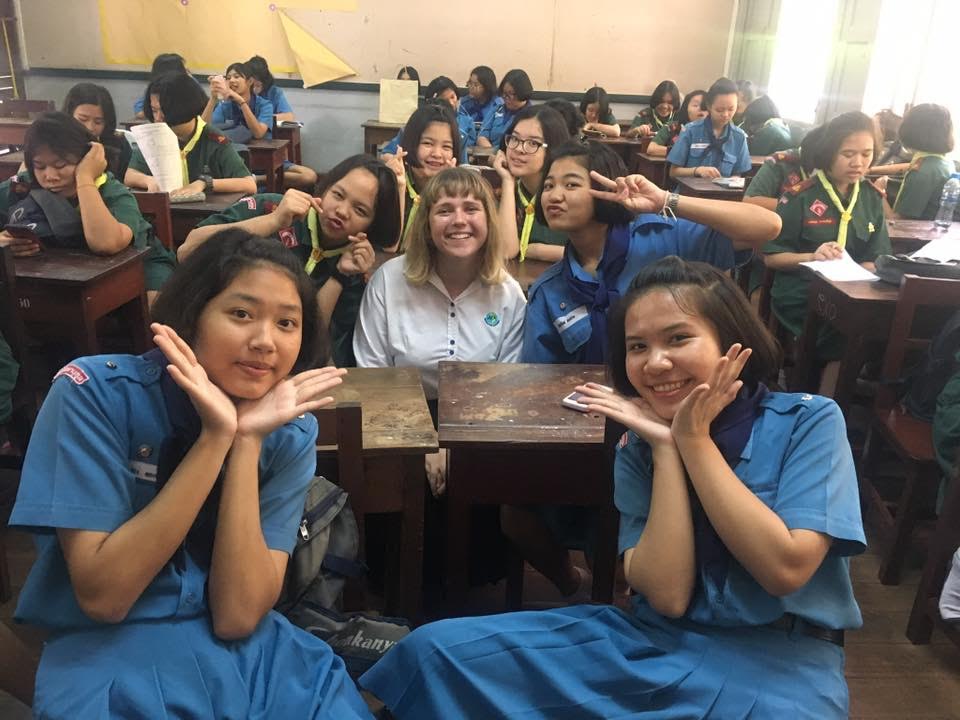
Most Premier TEFL interns in Thailand work in public schools or private bilingual schools, often teaching speaking‑focused English classes. Class sizes can be big (30–50 students), but the atmosphere is usually friendly, curious, and relaxed.
Beth, a Premier TEFL intern who taught in Chonburi and later in Phuket, talks about the challenges and rewards of teaching teens:
She later moved into a homeroom position, teaching multiple subjects to six‑year‑olds:
This reflects one of Thailand’s strengths: once you have a foot in the door, it’s relatively easy to move between roles, schools and even cities.
Lifestyle: Beaches, Temples and “Land of Smiles”
Thailand’s nickname, the “Land of Smiles,” really does match the reality many teachers describe. Beth sums up the warmth of Thai culture like this:
“I also noticed how warm and welcoming Thai people are as a whole, I quickly learned that they treat you as one of their own and will fall over themselves to help you. It definitely is the Land of Smiles.”
On your weekends and holidays you’ll be spoiled for choice:
-
Island‑hopping in the south (Phuket, Koh Phi Phi, Koh Samui).
-
Temple‑hopping in Chiang Mai and the north.
-
Street food tours in Bangkok, Chiang Mai or any provincial town.
Many teachers arrive planning to stay one semester and end up staying for years because the lifestyle is so addictive.
Who Thailand Is Best For
Thailand is ideal if you:
-
Want a gentle first TEFL experience with strong support and a well‑established expat community.
-
Care more about lifestyle and travel than maximising savings.
-
Like the idea of a 4–5 month internship as a “trial run” before deciding your next move.
For many Premier TEFL interns, Thailand becomes the place that makes them fall in love with teaching.

Vietnam in 2026: High Earnings and Long‑Term Potential
Vietnam has rapidly moved from a “hidden gem” to one of the most sought‑after teaching destinations in Asia.
Salaries, Costs and Savings
In 2026, teachers in Vietnam typically earn between 1,200 and 2,000 USD per month, with higher figures possible in big cities or for experienced teachers.
Living costs, including rent, usually come in around 700–1,200 USD per month, depending on your city and standard of accommodation.
That gives Vietnam the best savings potential of the three countries. Many teachers report being able to save several hundred dollars per month even while enjoying frequent meals out and weekend trips. A Premier TEFL intern, Will points out how many interns decide not to leave:
Classroom Experience in Vietnam
Vietnamese schools and language centres tend to be more structured and results‑driven than their Thai counterparts. You’re more likely to receive set curricula, textbooks, and sometimes detailed teaching guides.
Will describes the balance between structure and creativity:
You can expect:
-
Smaller class sizes (often 15–25 students).
-
A strong focus on exam preparation or measurable progress.
-
Evening and weekend classes in language centres, or daytime hours in schools.
This makes Vietnam a strong option if you’re building a TEFL career and want experience that looks impressive on a CV.

Lifestyle: Cafe Culture, Motorbikes and Big Contrasts
Vietnam mixes historic charm with rapid modern growth. Hanoi offers lakes, Old Quarter cafes, and four distinct seasons, while Ho Chi Minh City buzzes with skyscrapers, rooftop bars and year‑round warmth.
Teachers often highlight:
-
A vibrant cafe culture, with endless coffee shops where you can lesson‑plan or socialise.
-
Easy access to epic nature, from Ha Long Bay and Sapa to Hoi An and the Mekong Delta.
-
A strong community of long‑term expats and teachers, especially in major cities.
Because salaries are strong and the country is affordable, Vietnam is also a fantastic base for exploring the rest of Asia—many teachers hop to Thailand, Cambodia, Laos, or even further afield during holidays.
Who Vietnam Is Best For
Vietnam is ideal if you:
-
Want to maximise savings while still enjoying a good lifestyle.
-
Are thinking more long‑term about your TEFL career.
-
Don’t mind a little more structure, paperwork and commitment in exchange for stability.
It’s common for Premier TEFL alumni to start in Vietnam, build experience and a financial cushion, and then branch out to other regions.
Cambodia in 2026: Flexible, Impactful, and Underrated
Cambodia doesn’t always get as much attention as Thailand or Vietnam, but it’s increasingly popular with teachers who want flexibility, lower barriers to entry, and a sense of real impact.
Salaries, Costs and Savings
Teacher salaries in Cambodia vary widely, but many positions range from 700–1,500 USD per month, with international schools and experienced roles paying up to 2,500 USD.
The cost of living is relatively low, often around 500–1,000 USD per month including rent, especially outside the most expensive neighbourhoods.
That means you can live comfortably and still save, particularly if you land a better‑paid role in Phnom Penh or Siem Reap. For many, the bigger “gain” is the experience itself: hands‑on teaching, meaningful connections, and a close‑knit community.
Classroom Experience and Types of Schools
In Cambodia you’ll find a broad mix of:
-
Private language centres in cities.
-
Private and international schools.
-
NGOs and community‑based education projects.
Classrooms often have fewer resources than in Thailand or Vietnam, and you may encounter more beginner‑level learners. That can feel challenging at first, but also makes each lesson and each breakthrough especially rewarding.
Premier TEFL intern Eva chose Cambodia specifically because she wanted this combination of support and real‑world experience:
Requirements and Flexibility
One of Cambodia’s biggest advantages is flexible entry requirements. While a TEFL certificate is strongly recommended (and included with Premier TEFL internships), many roles do not require a bachelor’s degree.
Eva highlights how important this was in her decision:
Hiring often happens year‑round, and it’s common for teachers to secure jobs on the ground by visiting schools with a CV. This makes Cambodia especially attractive if you’re travelling through the region and want to settle somewhere more spontaneously.
Lifestyle: History, Humility and Adventure
Cambodia offers a very different feel to its neighbours. You’ve got the world‑famous Angkor Wat temple complex, laid‑back riverside towns, and the emerging coastal scene around places like Kampot and Kep.
At the same time, the country’s recent history is visible and sobering, and many teachers describe feeling a strong sense of humility and perspective during their time there.
Eva explains what drew her in:
Weekends might involve temple‑hunting, exploring markets, or overland trips to neighbouring countries like Vietnam, Thailand, or Laos.
Who Cambodia Is Best For
Cambodia is ideal if you:
-
Do not have a degree but still want to teach abroad.
-
Want to make a tangible impact in classrooms with fewer resources.
-
Prefer a flexible, less rigid approach to contracts and visas.
For many Premier TEFL interns, Cambodia becomes the place where their teaching confidence really takes off.
Choosing Between Thailand, Vietnam and Cambodia in 2026
By now you probably see that there’s no single “best” Southeast Asian country to teach in—just different best fits depending on your goals.
Simple Decision Guide
Ask yourself: what matters most right now?
-
“I want to save as much as possible and build my CV.”
-
Choose Vietnam first.
-
-
“I want a fun, social, and scenic first TEFL experience.”
-
Choose Thailand for a semester or school year.
-
-
“I want flexibility and I don’t have a degree (yet).”
-
Choose Cambodia, especially through a structured internship.
-
-
“I want meaningful impact and don’t mind things being a bit rough around the edges.”
-
Cambodia again is a strong contender.
-
-
“I’m not sure what I want—just that I want to teach and travel.”
-
Start with a shorter Thailand internship, then consider Vietnam or Cambodia for your second placement.
-
Example TEFL Pathway
Many Premier TEFL alumni end up creating a multi‑country TEFL journey. One realistic three‑year path might look like this:
-
Year 1: Semester internship in Thailand to gain confidence and experience lesson planning.
-
Year 2: Full‑year contract in Vietnam to maximise savings and build a strong professional CV.
-
Year 3: Community‑focused placement in Cambodia to deepen impact and experience a more grassroots environment.
Beth, for example, only intended to do one semester in Thailand but ended up building a multi‑year teaching journey there and is now thinking about future moves to Japan, South Korea and Australia. TEFL often starts as a gap‑year plan and quietly turns into a lifestyle.
Getting Started with Premier TEFL in Southeast Asia
Whichever country you choose, the most important step is to get properly prepared. That means:
-
Completing an accredited TEFL course.
-
Understanding visa processes and required documents.
-
Having support on the ground when you arrive.
Premier TEFL internships in Thailand, Vietnam and Cambodia are designed to bring all of that together in one package—combining your TEFL certification, guaranteed school placement, in‑country support, and a ready‑made community of fellow teachers.
That support can make all the difference, especially in your first few weeks in the classroom. As Eva notes, having training and a structured internship gave her the confidence to step into teaching in Cambodia rather than just relying on an online course alone.
Teaching English in Southeast Asia in 2026 is more than just a job; it’s a launchpad for travel, personal growth, and an international career. Whether your heart is set on Thailand’s beaches, Vietnam’s buzzing cities, or Cambodia’s powerful history, there’s a path for you.
The post Teaching English in Southeast Asia 2026: Thailand vs Vietnam vs Cambodia Compared appeared first on Premier TEFL.