![[object Object]](https://www.cheapteflcourses.com/wp-content/uploads/2026/05/5428261.jpg)
Moving to a new home is always an adventure, but few newcomers experience a welcome quite like this. Picture this: you’ve just settled into your new neighborhood when the local district leader approaches you with two surprisingly distinct options—become the community’s English teacher or obtain a hunting license to deal with the local bear population. The choice, as you might imagine, was clear. Teaching English suddenly seemed like the safer, more sociable path forward.
It’s a quirky introduction to rural life, but it perfectly illustrates how language skills can open unexpected doors. For many TEFL enthusiasts, the classroom is a familiar space. But what happens when the classroom moves into your living room, becomes a community hall gathering, or turns into a twice-monthly coffee chat with neighbors of all ages? This is the reality of community-based English teaching, and it’s a rewarding challenge that looks nothing like a traditional language school setting.
The Charm of Multigenerational Classes
Your new students won’t be corporate professionals or university students. Instead, you’ll face a lively mix of five adults and six children. This is not a drawback—it’s your greatest advantage. Multigenerational classes create a natural, family-like learning environment. The adults bring patience and life experience, while the children bring energy and fearless repetition. When one group struggles to understand a phrase, the other often helps bridge the gap organically.
Teaching this demographic requires a shift in mindset. Forget rigid lesson plans and textbook drills. Your goal is connection, not perfection. The adults are likely learning English to engage with travelers, understand foreign media, or simply enjoy a new hobby. The children might be curious about cartoons, games, or making international friends. Your job is to make English feel like play, not homework.
Moving Beyond the Callan Method
The Callan Method is effective for rapid speaking improvement in structured, one-on-one or small group settings. It relies on fast questioning, constant correction, and high repetition. However, this approach can feel intimidating for beginners, especially children and older adults who may lack confidence. In a mixed-age community class, rapport matters more than speed.
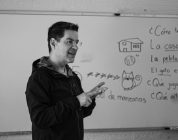
Instead of the Callan Method, consider a communicative, task-based approach. This means teaching English through doing. Plan activities where everyone participates naturally. For children, start with songs, simple crafts, and movement games like “Simon Says.” For adults, focus on practical phrases they can use immediately—greeting neighbors, shopping, describing their family. The magic happens when you combine these groups: have a child teach an adult the words to a song, or ask an adult to help a child practice introducing themselves.
Building Community Through Language
You mentioned wanting to meet your neighbors, and this class is the perfect vehicle for that. Treat the first few sessions as get-to-know-you events rather than formal lessons. Learn everyone’s names, their hobbies, and why they want to learn English. Use that information to shape your future lessons. When students see that you genuinely care about their lives, they will open up, and your lessons will become richer.
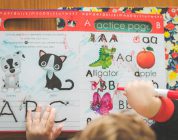
Consider setting up a simple routine. Start with a warm-up game that gets everyone moving and laughing. Follow with a short presentation of new vocabulary, using pictures or real objects. Then, break into small groups for practice—pair adults with children if possible. End with a group activity like a short skit, a shared snack where everyone practices ordering in English, or a simple question-and-answer session.
Practical Tips for Your New Classroom
You’re working with a free space and a willing crowd, so keep things simple and low-pressure. Bring visual aids: flashcards, a whiteboard, magazines, or even your phone to show pictures. Print a list of common phrases everyone can refer to. For the children, bring stickers or stamps as rewards—they love small incentives. For adults, bring tea or snacks and treat the class like a social gathering first.
Most importantly, be patient. Progress will feel slow at first. The five-year-old might remember only “hello” after three sessions. The grandmother might mix up “yes” and “no.” That is okay. Community teaching is a marathon, not a sprint. Each session builds trust and familiarity, not just language skills.
Your district leader gave you a unique opportunity. You chose the path of teaching over bear hunting, and in doing so, you’ve accepted a role that goes beyond instruction. You are now a bridge, a neighbor, and a catalyst for connection. The bears can wait. Your new community is ready to learn.