TEFL course accreditation is one of the most important – and most confusing – parts of choosing a TEFL provider. It affects how employers view your qualification, where you can work, and whether your investment of time and money actually pays off. For a provider like Premier TEFL, accreditation is central to course design, quality control, and global recognition, so understanding it will help you make a confident choice.
What Is TEFL Course Accreditation?
Accreditation is an external quality‑check on a TEFL course carried out by a recognised body. In simple terms, an independent organisation evaluates a provider’s courses, trainers, assessment methods, and student support against agreed standards. If the provider meets those standards, the accrediting body gives its stamp of approval for a set period and then reviews it regularly.
This matters because the TEFL industry is not regulated in the same way as university degrees or state‑licensed schools. Almost anyone can create a website and claim to offer “TEFL certification” – but that does not mean employers will respect it. Accreditation helps separate serious, professional providers from short, low‑quality “weekend certificates” and bargain courses that do not prepare you properly for the classroom.
Good accreditation is not just about a logo on a website. It usually involves:
-
A review of course content and learning outcomes.
-
Checks on assessment standards (how you are graded and what “passing” actually means).
-
Verification of tutor or trainer qualifications.
-
Monitoring of student support and complaints procedures.
-
Periodic re‑inspection to ensure standards are maintained.
When a TEFL provider invests in strong accreditation, it is voluntarily opening itself up to scrutiny. That is a good sign for you as a learner.
Accreditation, Regulation, and Endorsement: What’s the Difference?
When you research TEFL courses, you will see a mix of words: “accredited”, “regulated”, “endorsed”, “approved”, “recognised”. They do not all mean the same thing.
Accreditation typically refers to a quality assurance process run by an independent body, often focused on vocational or language‑teaching qualifications. The body looks at the course design, teaching, and administration, and then makes a formal judgement that the course meets its standards.
Regulation usually refers to oversight by a national or government‑linked agency. In some countries, qualifications can be placed on an official framework (for example, a levels system), which gives employers a clearer idea of the level and complexity of the course. “Level 5” diplomas, for example, are designed to broadly align with a particular band of difficulty and depth of study, similar to other vocational or early higher‑education qualifications.
Endorsement or approval can be softer. Sometimes a university, school, or language organisation will “endorse” a course, meaning they like the materials, use them internally, or support the provider. This can be helpful as a signal, but it might not carry the same detailed quality assurance process as formal accreditation or regulation.
When you see marketing claims, it is worth asking:
-
Who is the accrediting or regulating body?
-
What standards do they use?
-
Can I verify this on the accreditor’s own website?
-
Does the wording describe a full qualification, or just a short “approved” workshop?
Being precise with these terms helps you avoid being misled by vague or inflated claims.
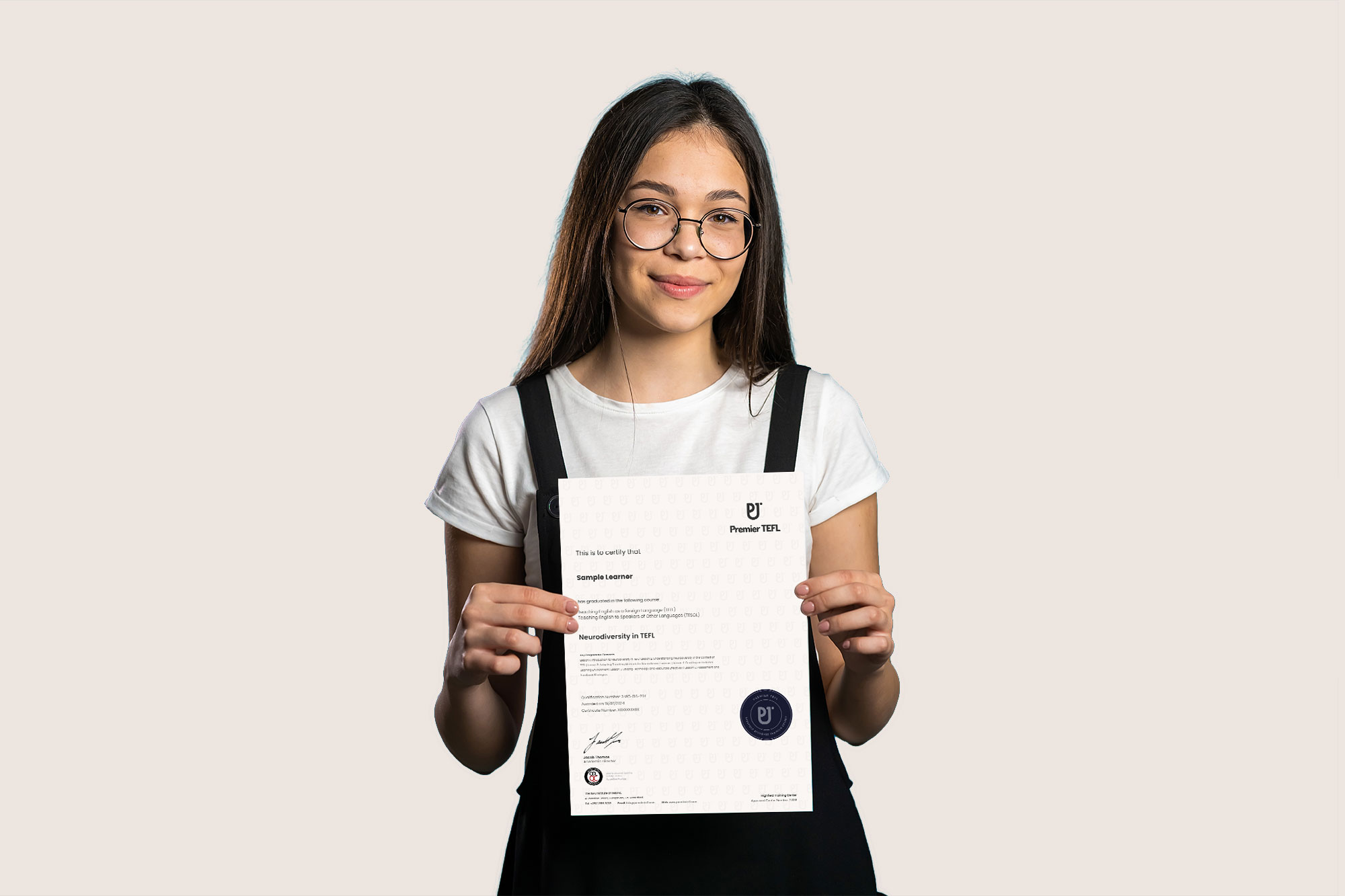
At Premier TEFL, our courses are formally quality‑checked on both sides of the Atlantic. We are a DEAC AQC Approved Curriculum Center in the USA and an approved Highfield and Ofqual‑regulated provider in the UK, which means our qualifications meet rigorous, externally‑verified standards for course design and assessment.

Why TEFL Accreditation Matters to Employers
From an employer’s point of view, accreditation is shorthand for “we can trust this qualification.” Schools, recruiters, and online platforms are flooded with applications. They do not have time to research every obscure certificate individually, so they rely on known benchmarks: course length, level, and accreditation.
Accreditation matters to employers because it tells them several practical things:
First, it signals that the course covers core teaching skills. Accredited courses must usually demonstrate that they teach the basics of lesson planning, classroom management, grammar and language awareness, skills development (reading, listening, speaking, writing), and assessment. That makes it more likely that a new teacher will be functional in the classroom rather than just holding a piece of paper.
Second, it suggests consistency. If a provider is externally checked, employers can be more confident that two people with the same certificate have gone through a similar level of training and assessment, instead of one breezing through in a weekend and another laboriously studying for months.
Third, it reduces risk. Hiring a teacher is an investment. Schools do not want to discover halfway through a semester that their new teacher cannot plan a lesson or manage a class. Trusted accreditation reduces that risk because it implies a minimum standard of competence.
Finally, for some organisations – particularly more formal language schools, universities, and government‑linked programs – certain accreditations or levels are written directly into hiring criteria. In other words, a course without recognised accreditation may simply make you ineligible to apply, regardless of how motivated you are.
Understanding Course Levels and Hours
When you browse TEFL courses, you will often see two key elements: “hours” and a “level”. Both are important, and accreditation ties into them.
The “hours” advertised typically refer to the approximate amount of guided study time: how long the provider expects the average learner to spend on readings, lectures, tasks, and assessments. A widely accepted minimum for a serious entry‑level TEFL course is 120 hours. Anything shorter than that is rarely taken seriously by good employers, especially if it is entirely self‑paced with no assignments.
“Level” is usually linked to a national or regional qualifications framework. For example, in some systems a Level 5 TEFL Diploma is designed to correspond in complexity to the first year of university or a higher‑level vocational course. It often includes more in‑depth content, more assignments, and a greater expectation of critical thinking than a shorter 120‑hour “certificate” course.
Accreditation bodies will look at both of these factors. To place a qualification at a given level, they examine the learning outcomes and the amount of work required. That is why a random 20‑hour “TEFL taster” cannot honestly be marketed as equivalent to a full Level 5 qualification.
For you, this means:
-
If you want broad employability, look for courses of at least 120 hours.
-
If you want maximum credibility and access to more competitive roles, look for a regulated, levelled qualification (for example, a Level 5 diploma) from an accredited provider.
-
Be wary of large “hour” numbers that come from bundling lots of micro‑courses that are not clearly assessed; hours alone do not guarantee quality.
How Premier TEFL Uses Accreditation in Its Courses
A serious TEFL provider builds its course portfolio around accreditation. For example, it might offer:
-
A 120‑hour accredited TEFL certificate as a recognised minimum for entry‑level teachers.
-
More advanced, regulated Level 5 diplomas for learners who want deeper training and stronger CVs.
-
Specialist add‑on courses (teaching young learners, business English, online teaching, exam preparation, advanced grammar) that carry their own quality benchmarks and learning outcomes.
The provider then maps these courses against accreditation standards: aligning learning outcomes, assessment tasks, tutor qualifications, and student support systems with what external bodies require. Accreditation also influences practical processes such as how long students have to complete work, how assignments are graded, and how appeals are handled.
For a brand like Premier TEFL, this creates a consistent progression route. A student can start with a core accredited certificate, then stack on regulated higher‑level qualifications and specialisms, all within a known quality framework. Employers recognise the name, understand the levels, and feel more confident hiring graduates of those programs.
Red Flags: When TEFL “Accreditation” Is Misleading
Unfortunately, not every “accredited” TEFL course deserves your trust. Because there is no single global regulator for TEFL, some providers rely on obscure or low‑value accreditors to make their courses look more impressive than they are.
Common red flags include:
-
Vague wording such as “internationally recognised” or “fully accredited” without naming who provides that accreditation.
-
Unknown “accrediting” organisations that have little online presence, no clear standards, or appear to exist mainly to sell accreditation.
-
Accreditation bodies that are owned or controlled by the same people who run the TEFL provider itself – in effect, accrediting their own courses.
-
Claims that a very short course (for instance, a 40‑hour quick certificate) is “equivalent” to a more substantial regulated qualification without proper justification.
-
Websites that use lots of official‑sounding logos but provide no way to verify the accreditation on the accrediting body’s site.
When you see these signs, it does not necessarily mean the course is worthless, but it does mean you should investigate carefully before enrolling. A good rule of thumb is: if a provider is genuinely proud of its accreditation, it will name the accrediting body clearly and invite you to verify the relationship.
How to Check Whether a TEFL Course Is Legitimately Accredited
Because you are investing your money and time, it is worth doing a few simple checks before choosing any TEFL course.
First, find the accreditation information on the provider’s site. Look for a page or section that names the accrediting or regulating bodies, describes the nature of the relationship, and explains which specific courses are covered. Sometimes not every course in a provider’s catalogue is accredited; you want to know exactly which ones are.
Second, go to the accrediting body’s own website. See whether the TEFL provider is listed there as an approved centre or whether the specific course title appears in a directory of recognised qualifications. This external confirmation matters more than any claim on the provider’s own marketing materials.
Third, check whether the accrediting body has clear standards and a real presence. Do they explain their quality assurance process? Do they list other well‑known providers or institutions they accredit? Are their contact details transparent? An accreditor with a professional website, clear policies, and a variety of clients is generally more trustworthy than a name with no independent footprint.
Fourth, look at how long the accreditation has been in place and whether it is renewed. Some relationships lapse; others are new and untested. A provider with a long track record of accreditation and regular re‑inspections is usually a safer bet than one that has only recently been approved or has changed accreditors repeatedly.
Finally, consider asking employers or alumni. Forums, reviews, and graduate stories can give you insight into how a certificate is viewed in the real world. If many teachers report that their qualification is accepted by a wide range of schools and platforms, that is a good sign.
How Accreditation Affects Your Career Options
Accreditation is not just about getting your first job. It also influences your career trajectory over several years.
In the short term, accredited courses open more doors. You are more likely to meet minimum requirements for jobs abroad and on reputable online platforms. You can apply confidently to internships, language schools, and entry‑level positions, knowing your certificate will not be dismissed out of hand.
In the medium term, a properly accredited or regulated qualification can help you move into more competitive markets. Countries with higher salaries or stricter regulations often prefer or require certain types of qualifications – for example, longer courses, higher levels, or specific combinations of TESOL‑related training. If your first course meets recognised standards, it can be easier to upgrade, add further qualifications, or gain recognition of prior learning.
In the long term, accreditation can support transitions into related roles. If you later decide to pursue a master’s in TESOL, educational management, or curriculum design, universities may take more seriously a background that includes recognised TEFL certifications rather than informal or unaccredited courses. Similarly, if you progress into academic management in a language school, having a clear, externally‑validated training history strengthens your professional profile.
By contrast, if you start with a weak, unaccredited course, you may find yourself having to retrain later. That means paying twice – once for the cheap but limited certificate, and later for a more rigorous qualification that employers actually respect.
Price vs Quality: Why “Cheap” Can Be Expensive
It is understandable to be attracted to low‑cost TEFL courses, especially if you are a student or career‑changer on a budget. But when it comes to accreditation and course quality, going for the cheapest option can cost you more in the long run.
Low‑priced courses sometimes cut corners in three main areas:
-
They use watered‑down content that covers topics superficially instead of training you to handle real classroom challenges.
-
They minimise tutor involvement, offering little or no feedback on assignments, which means you never get personalised guidance on your teaching.
-
They skip full accreditation processes and rely on vague “recognition” that carries little weight with employers.
The result is a certificate that might look fine at first glance but does not give you the skills or credibility you need. You may struggle in your first teaching job, feel underprepared, or run into situations where employers reject your certificate and ask for a different kind of qualification.
A better approach is to see your TEFL training as an investment. A well‑accredited course from a reputable provider may cost more upfront, but it is more likely to pay off in terms of better job options, higher starting salaries, and smoother progression. It also supports your confidence: you know you have done serious training, not just ticked a box.
How to Choose the Right Accredited Course for Your Goals
Once you understand the basics of accreditation, the next step is choosing a course that fits your personal goals. Ask yourself a few questions:
-
Where do you want to teach – online, abroad, or both?
-
Are you aiming for a short‑term gap‑year experience or a longer‑term teaching career?
-
Are you open to investing extra time now to qualify for more competitive markets later?
If your goal is simply to get started teaching online or abroad with a solid foundation, an accredited 120‑hour course may be enough, especially if it includes observed teaching practice or strong assessment tasks. Make sure it is genuinely accredited and has a good reputation with employers.
If you are thinking more about competitive destinations, higher‑paying roles, or long‑term career development, a regulated higher‑level qualification, such as a Level 5 TEFL diploma, will often be a better choice. It will take more time and effort, but it signals a deeper commitment and offers more flexibility in where and how you teach.
In both cases, consider adding specialist modules once your core training is in place. Accredited specialisms in teaching young learners, business English, exam preparation, or online teaching can make your CV stand out, particularly if you are targeting specific niches or markets.
How Premier TEFL Students Typically Use Accreditation in Their Journey
Many learners follow a pattern that makes good use of accreditation at each step.
They start with an accredited core TEFL course to meet minimum hiring requirements and ensure they are well‑prepared for the classroom. That might be followed by a structured internship, assistantship, or initial teaching job where they gain real‑world experience under guidance.
Once they are comfortable teaching, they often upgrade with a more advanced, regulated diploma or add specialist qualifications to open up higher‑value opportunities – for example, online exam preparation classes, business English coaching, or roles in more competitive destinations.
Throughout this journey, having a clear, coherent set of accredited qualifications helps. Employers can see a progression, accrediting bodies recognise the levels, and teachers themselves feel more confident about the value of their training.
What to Look for and Why It Matters
TEFL course accreditation is not a minor detail; it is central to how your qualification will be perceived. When evaluating courses, focus on these essentials:
-
Look for clear, verifiable accreditation or regulation from recognised bodies.
-
Ensure the course offers at least 120 hours of guided study, or more if you want advanced standing.
-
Check that the content covers core teaching skills, not just theory or superficial overviews.
-
Verify that tutors are qualified and that there is structured assessment, not just automatic completion.
-
Treat your TEFL training as a long‑term investment in your teaching career, not just a quick certificate.
If you keep these principles in mind, you will be far better positioned to choose a TEFL course – whether with Premier TEFL or any other provider – that genuinely supports your goals, gives you confidence, and is respected by employers worldwide.
The post TEFL Course Accreditation Explained: What to Look For and Why It Matters appeared first on Premier TEFL.